
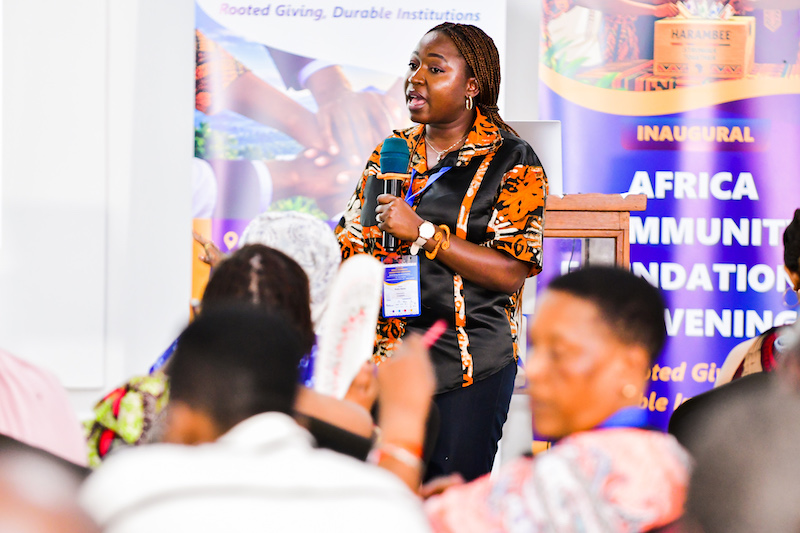
On Tuesday 6 October 2026, at the inaugural Africa Community Foundations Convening in Mombasa, Kenya, Shelly Satuku, Lead Researcher, presented the findings of Community Foundations in Africa: A Landscape Analysis. The study maps around 102 organisations at different stages of development across Ghana, Kenya, Malawi, South Africa, Uganda, Zambia and Zimbabwe.
A movement at different stages
Kenya has the most mature movement, Ghana is growing fastest, and Zambia is still exploring the model. Much of the growth since 2020 has come through community foundation support organisations, which incubate and accompany new community foundations.
The gaps
The study identifies clear gaps. Fundraising, financial and investment expertise, and governance are the weakest areas, and most community foundations depend heavily on volunteers. None of the seven countries has a law that specifically recognises community foundations, which leaves their status and the protection of endowments uncertain. Building endowments is also difficult where communities have limited income, immediate needs are high and trust has to be earned first.
Satuku encouraged organisations to think in terms of building permanence, and to look beyond cash. “Resources are not just about money,” she said. Skills, time and knowledge within communities count too.
What the study recommends
The study calls on governments to introduce dedicated legal frameworks and tax incentives, on donors to provide patient, long-term funding and matching grants, and on funders to give core support to the organisations that incubate community foundations. For the movement itself, the message is to put quality before quantity, build community trust through transparent reporting, diversify income early, including through social enterprise, and strengthen governance so that foundations outlast their founders.
Read the full report: Community Foundations in Africa: A Landscape Analysis